
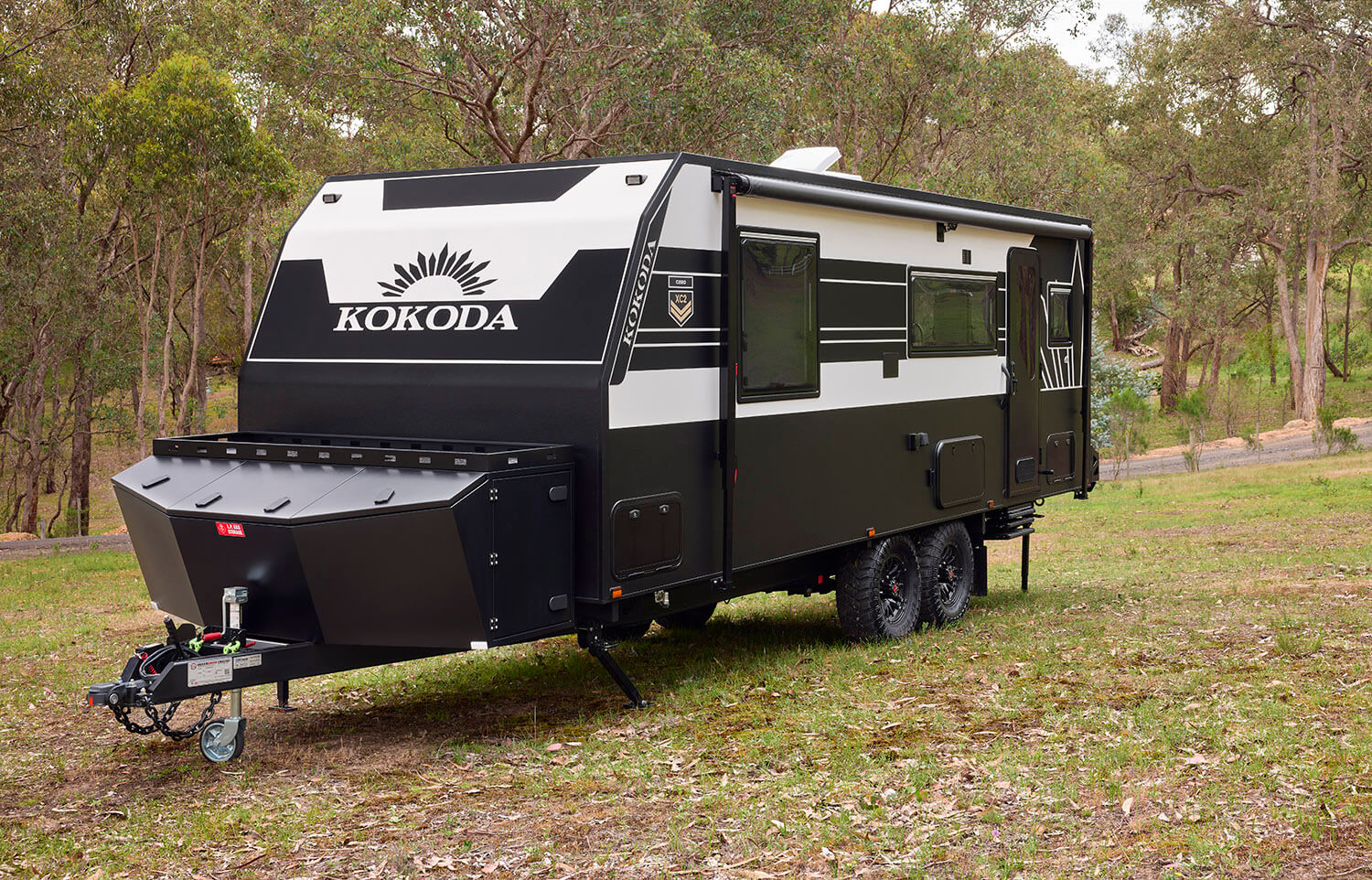
Kokoda XC Range Review: Serious Off-Grid Capability Without Sacrificing Comfort
The Kokoda XC Range has been created for travellers who want genuine off-grid capability without stepping into the company’s most extreme—and expensive—caravans. Sitting between Kokoda’s entry-level AF models and flagshi
By Andrew Clark · 20 August 2026 · 4 min read
The Kokoda Caravans (opens in a new tab) XC Range has been created for travellers who want genuine off-grid capability without stepping into the company’s most extreme—and expensive—caravans. Sitting between Kokoda’s entry-level AF models and flagship XG Range, the XC combines robust construction, substantial battery and solar capacity, and comfortable interiors suitable for everything from weekend escapes to extended trips around Australia.
Proudly Australian-owned, Kokoda builds its caravans in-house at its Campbellfield factory in Melbourne. That local manufacturing capability is an important selling point, particularly for buyers who value Australian engineering, locally sourced components and support after taking delivery.
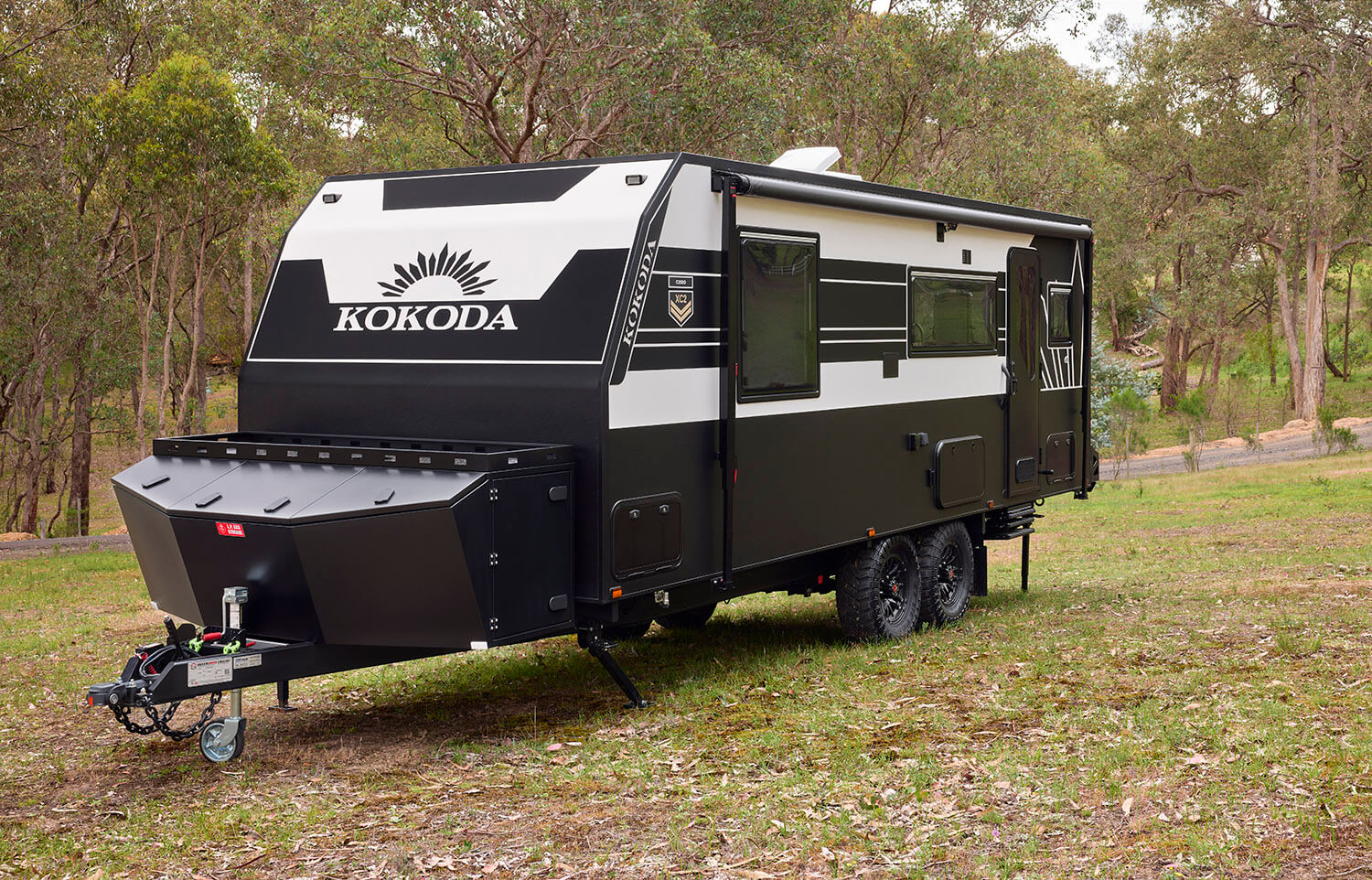
Strong, Insulated XCore Construction
At the heart of every XC caravan is Kokoda’s full bonded XCore sandwich-panel construction. The roof, walls and floor form an insulated, timber-free shell designed to provide strength, resist dust and help maintain a comfortable internal temperature.
This thermal efficiency is particularly useful when travelling through Australia’s contrasting conditions. Whether you are dealing with a scorching summer afternoon up north or a chilly Victorian morning, better insulation reduces the load placed on the caravan’s heating and cooling equipment.
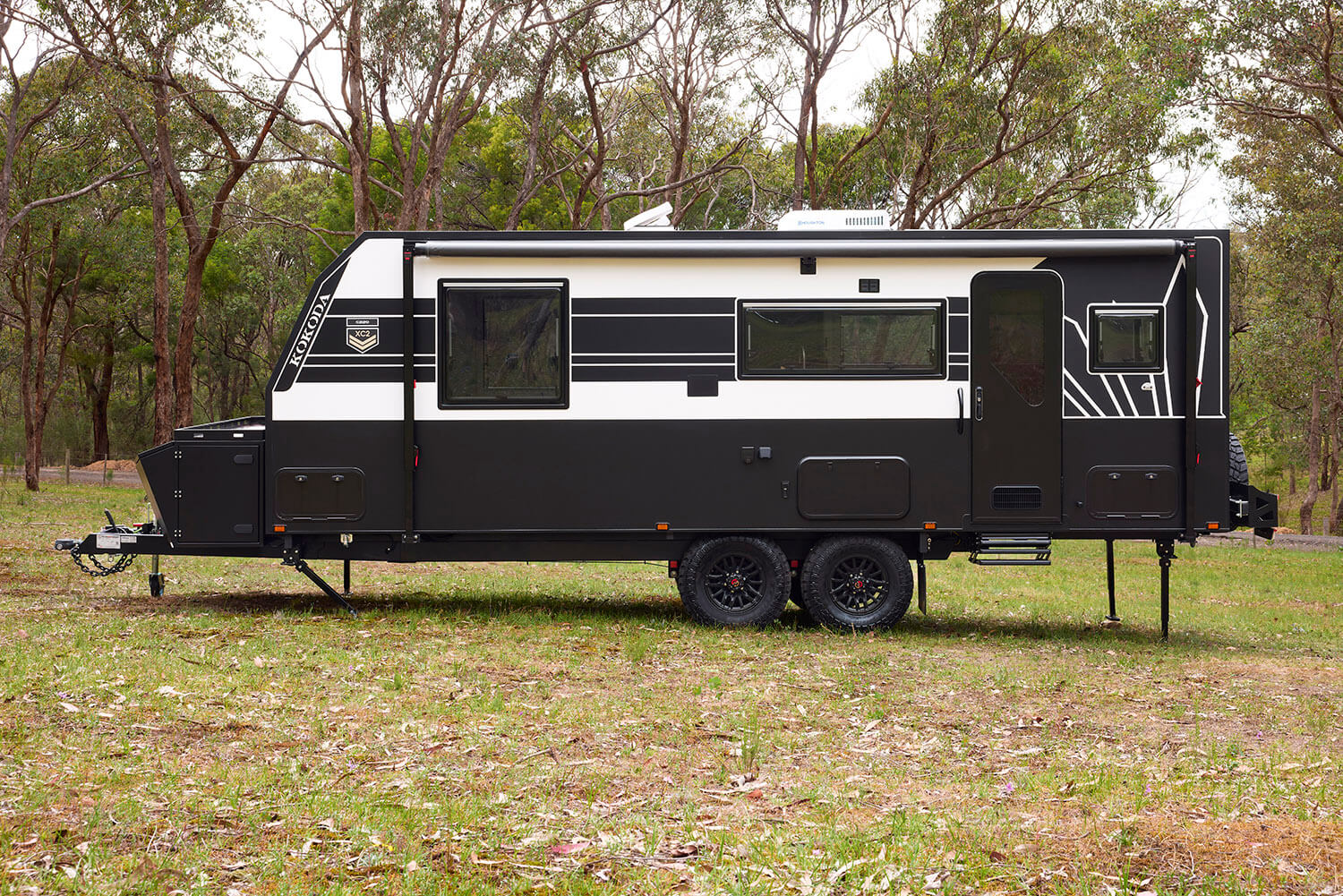
The exterior has the tough, purposeful appearance expected of a Kokoda, while the interior feels considerably more refined. Buyers can choose from a selection of couples and family floorplans, with the XC specification available across the different layouts. Exterior length, windows, storage hatches and weights will naturally vary according to the selected floorplan.
XC1 or XC2?
The range is divided into two specification levels.
The XC1, currently advertised from $139,000, comes equipped with:
- 860W of solar generation
- 400Ah of lithium battery capacity
- Victron 3000W inverter/charger
- Victron battery-management system with five-inch Cerbo display
- Teko independent coil-spring suspension
- 220 litres of freshwater capacity
- Portable 40-litre grey-water tank
- Large dual-slide toolbox
- Spare wheel and jerry-can storage
- External 12V connection for a Starlink Mini
For many buyers, the XC1 provides a very capable balance of equipment and price. Its power system should comfortably support normal off-grid living, provided you still apply a bit of common sense during extended poor weather.
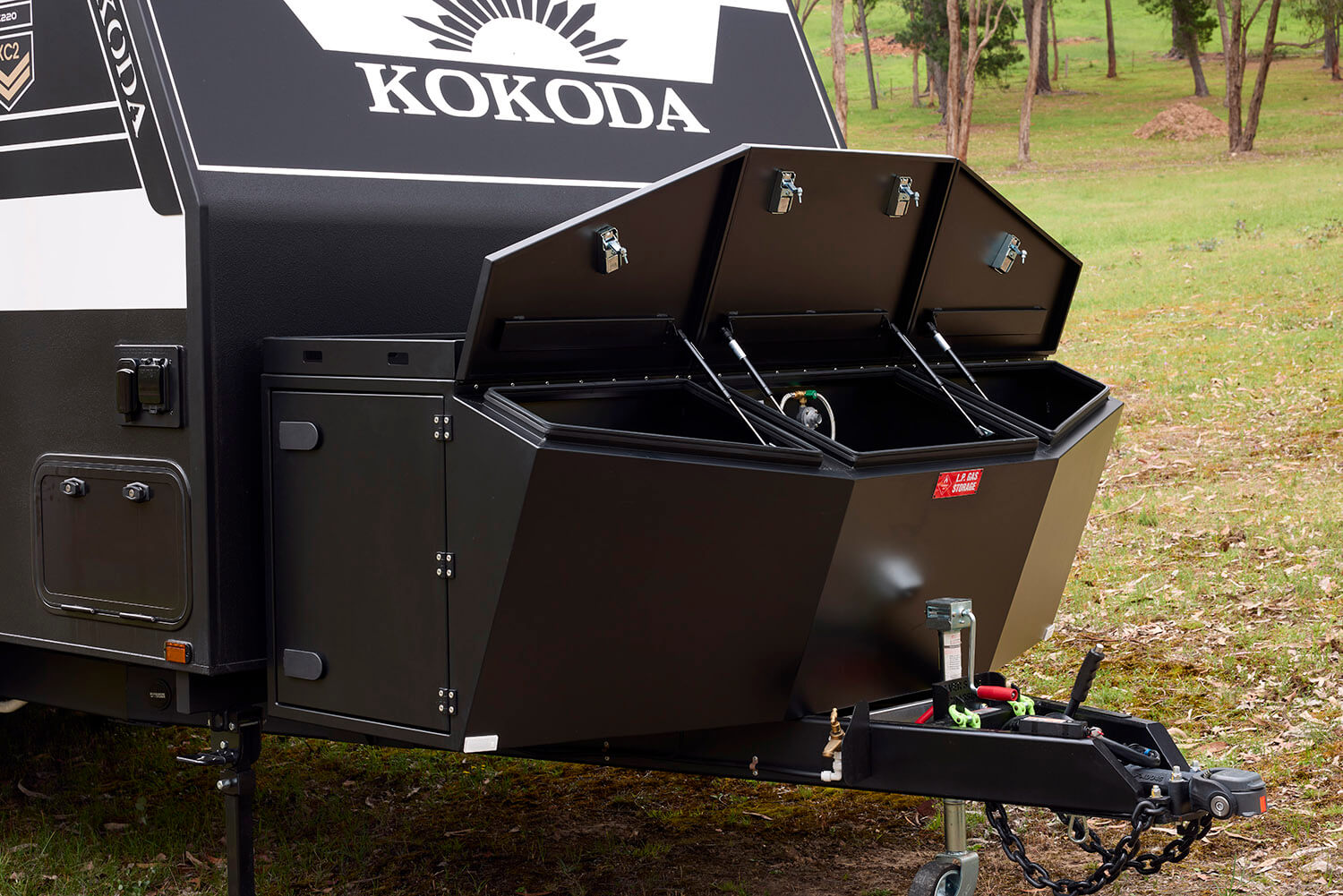
Starting from $150,000, the XC2 takes the concept further with 1,290W of solar, 600Ah of lithium capacity and Level 4 self-levelling remote airbag suspension. It also gains Kokoda’s larger Monster Toolbox, incorporating a stoneguard and internal gas-bottle storage.
That self-levelling suspension could be worth the upgrade by itself for travellers who regularly move between camps. Arriving on uneven ground and levelling the caravan remotely removes one of those little campsite jobs nobody misses doing—especially in the rain.
Both versions retain two 4.5kg gas bottles, while the heavily electrified cabin and 3000W inverter reduce reliance on gas or a portable generator. Kokoda describes its X-Ranges as “generator-less by design”, with the body, insulation and electrical systems engineered to work together rather than being treated as unrelated components.
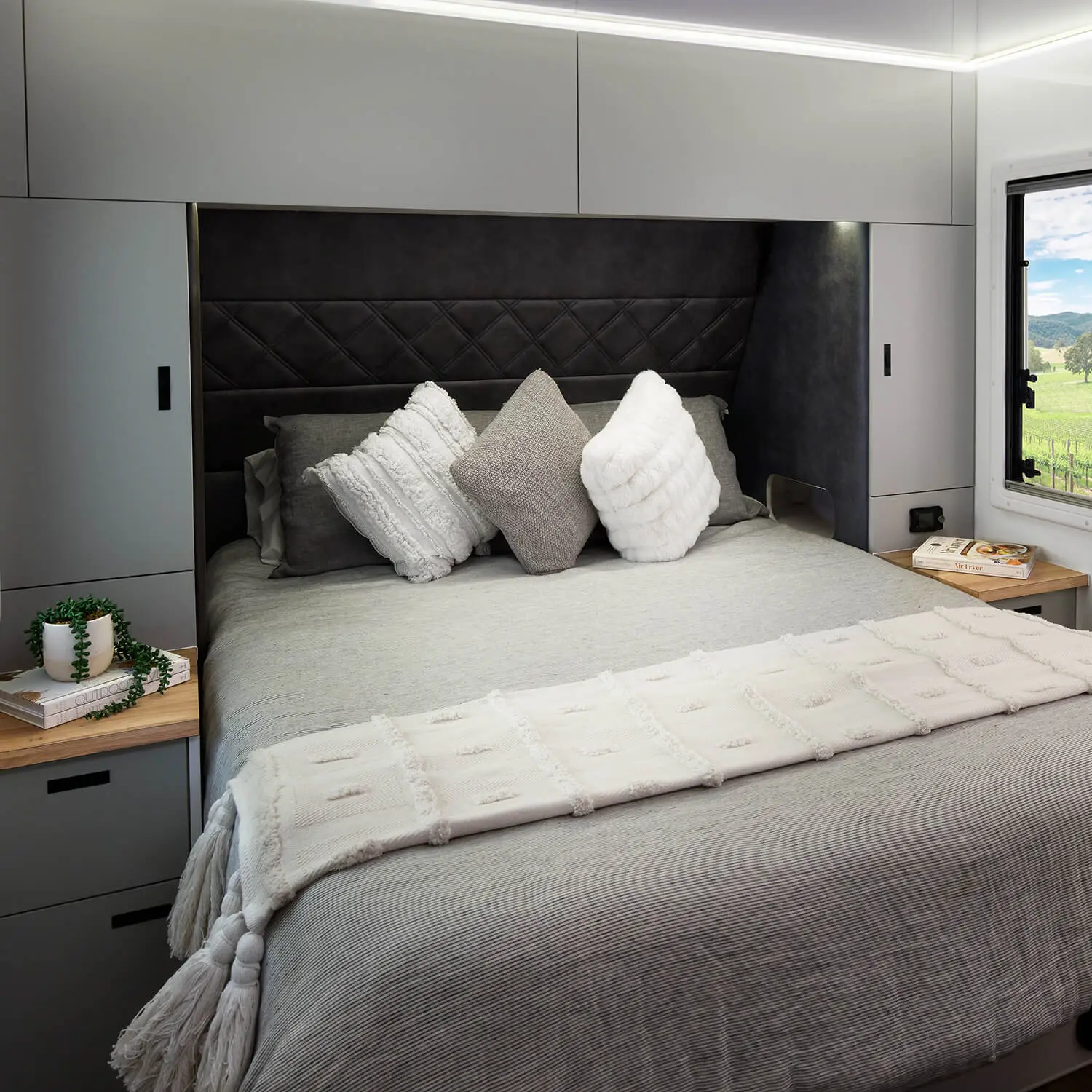
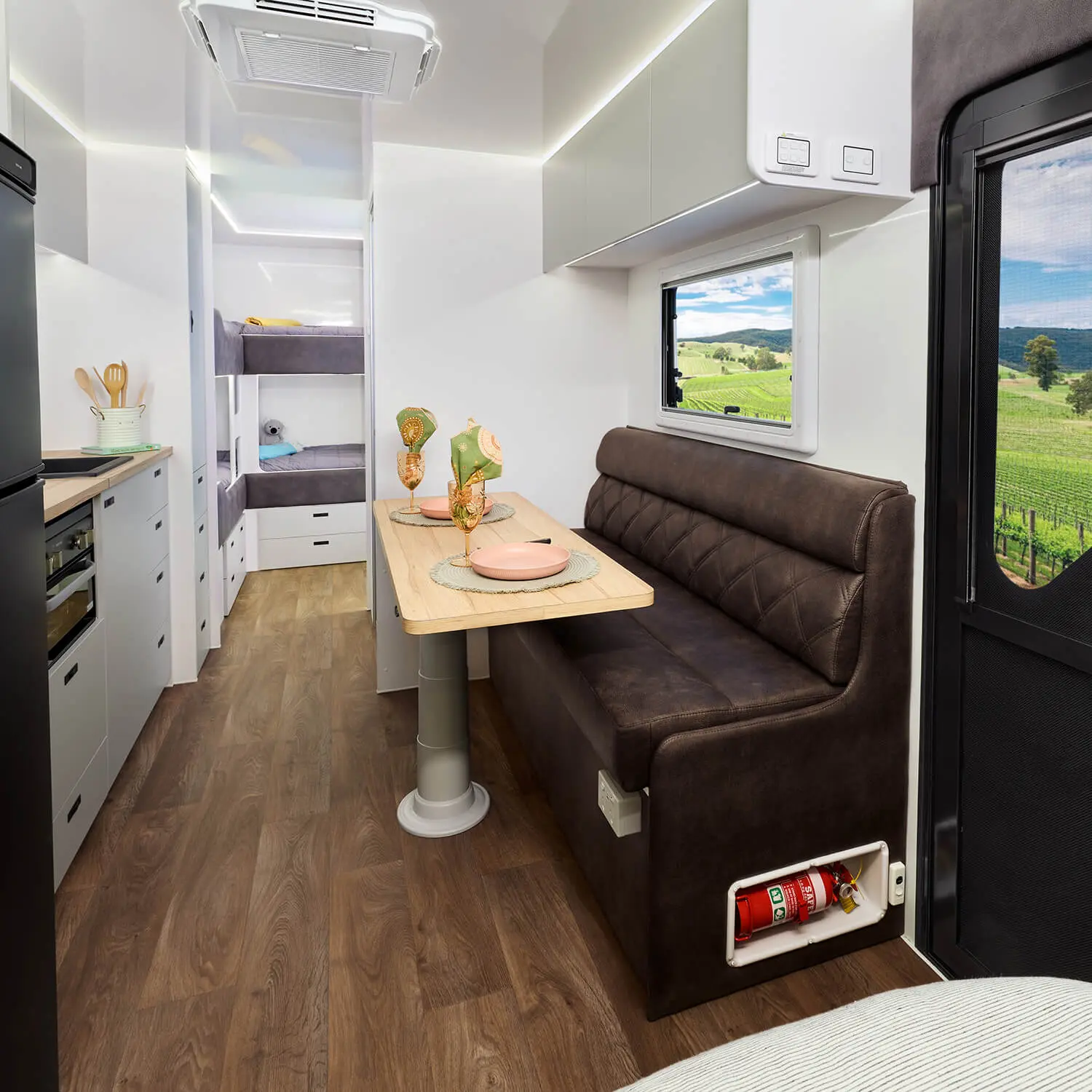

Our Verdict
The XC Range’s greatest strength is that it does not appear to be merely a conventional caravan with a few off-road accessories bolted underneath. Its composite construction, energy system, water storage and suspension have been considered as one complete touring package.
It is not a lightweight range, and buyers must carefully match their chosen floorplan to an appropriately rated tow vehicle. Final tare, ball weight, ATM and payload will depend upon the layout and fitted options, so those figures should be confirmed before signing a contract.
For couples or families wanting to leave the powered-site circuit behind, the Kokoda XC presents a convincing Australian-built package. The XC1 should satisfy most serious tourers, while the XC2 adds the power reserves and suspension technology needed for longer and more remote adventures.
Add Kokoda’s three-year factory warranty covering structural, plumbing and electrical components, and the XC shapes up as a strong choice for travellers who want to roam further, stay longer and remain comfortable when the blacktop disappears.
Specifications and advertised starting prices were current at the time of writing and should be confirmed directly withKokoda Caravans, as weights, equipment and pricing vary by floorplan and options.
Rate this story
No ratings yet — be the first.
Comments (0)
Related stories
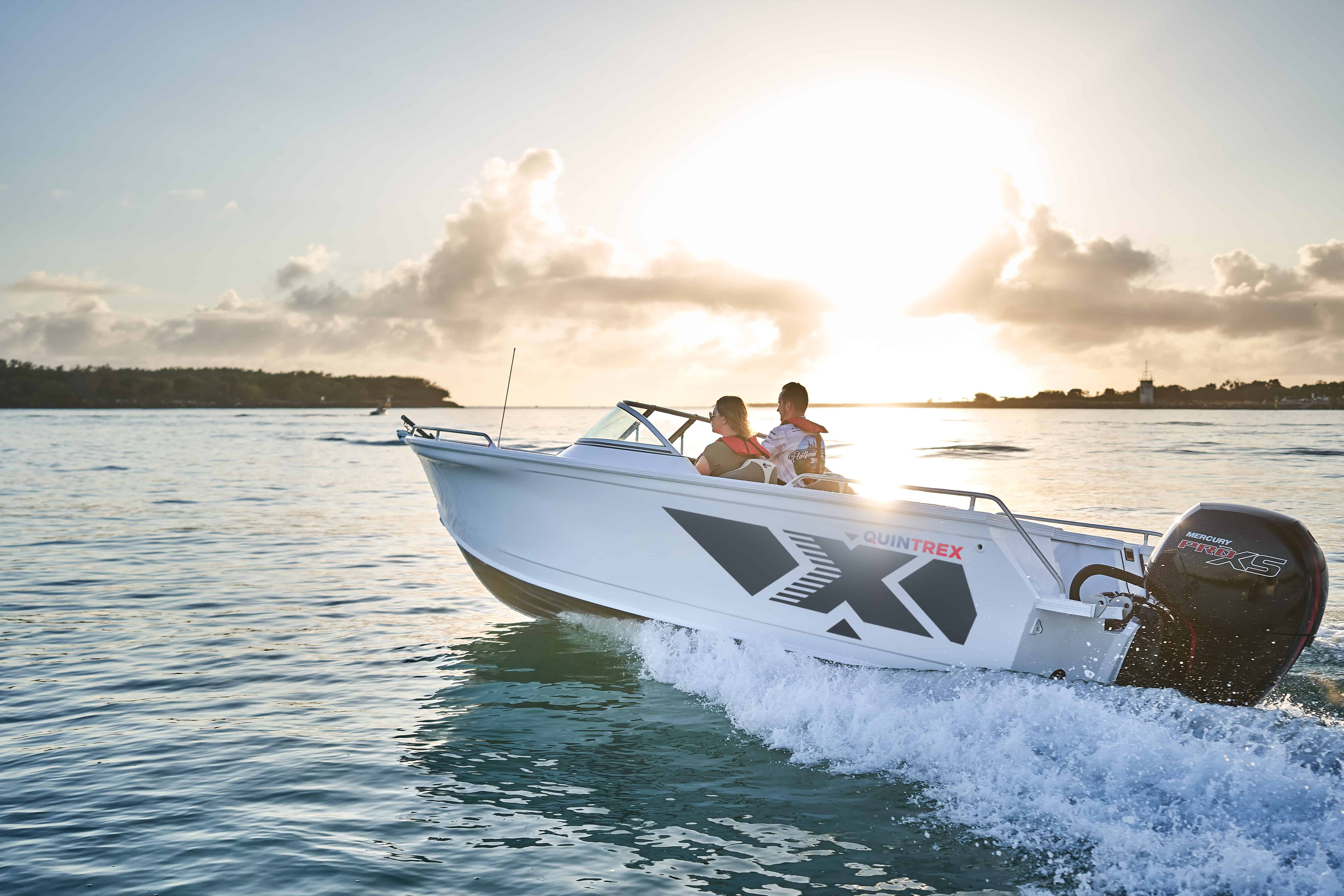
Quintrex 590 Cruiseabout Review – The Aussie Family Boat That Refuses to Pick a Hobby
We review the Australian-built Quintrex 590 Cruiseabout Pro, a versatile 6.21m family bowrider made for fishing, watersports, cruising and road-trip adventures.
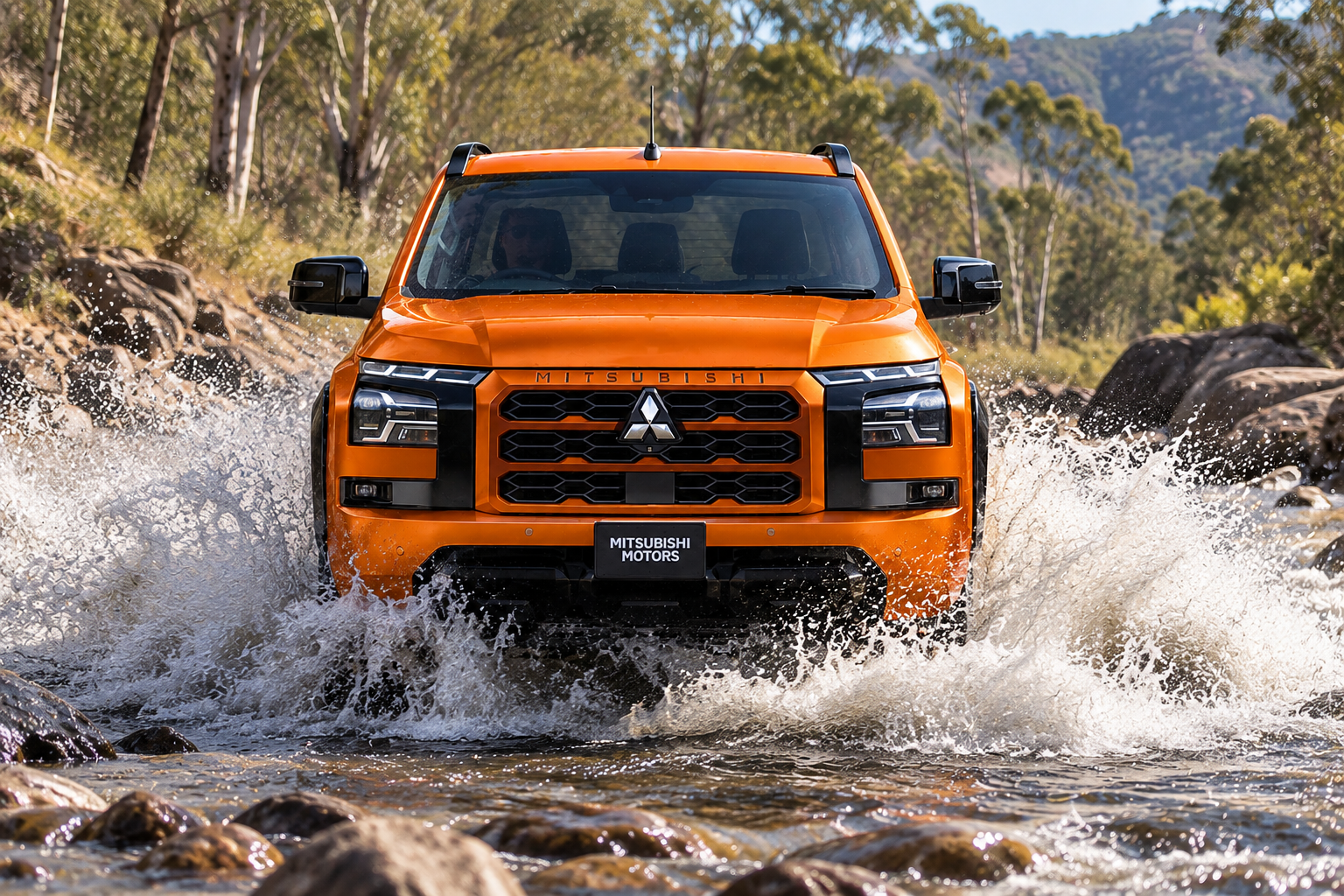
Mitsubishi Triton GLS – The Honest All-Rounder
We review the Mitsubishi Triton GLS, a 150kW bi-turbo diesel 4WD ute with 3.5-tonne towing, family-friendly comfort and genuine work-to-weekend touring ability.
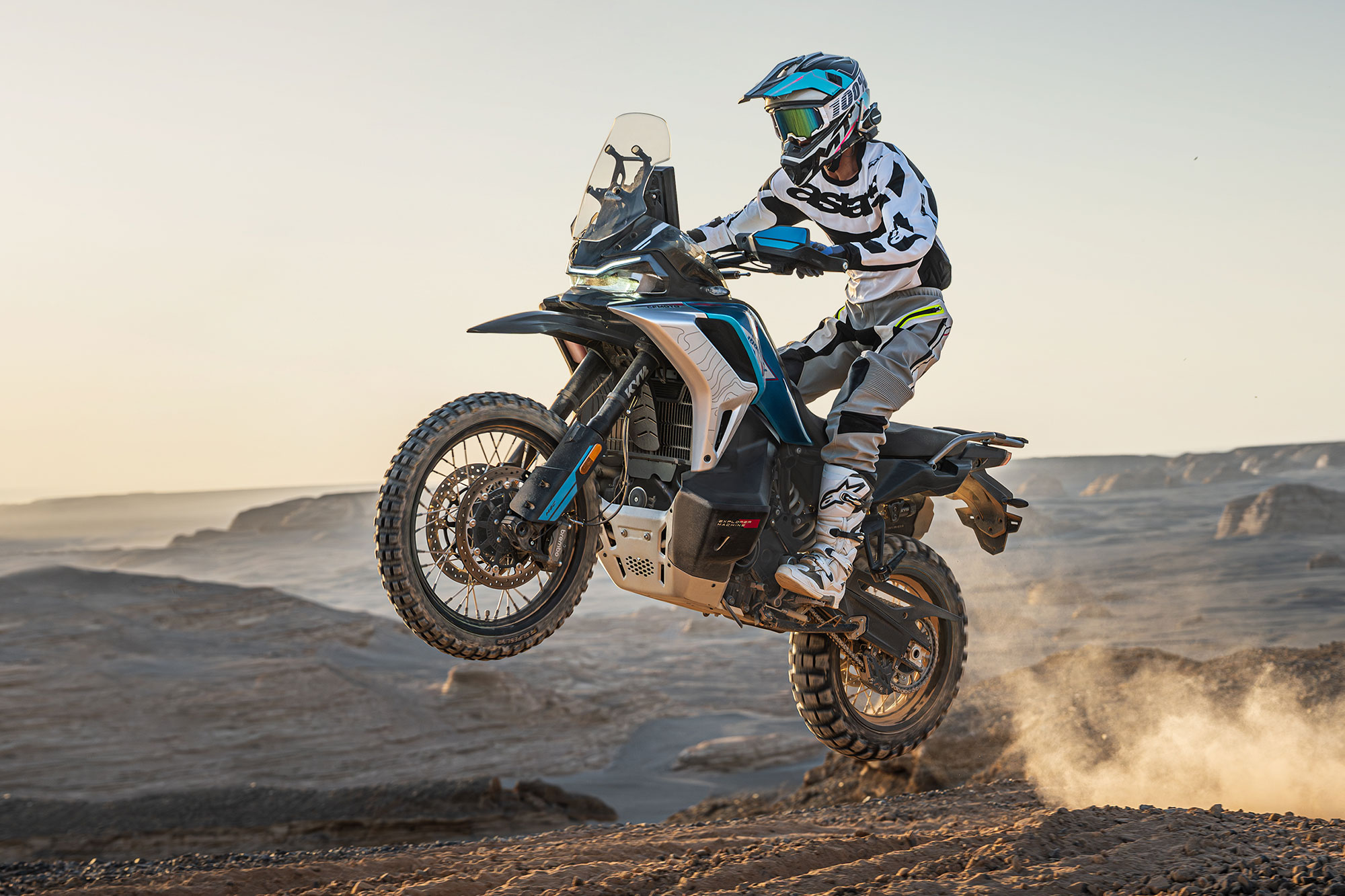
CFMOTO 1000MT-X – A Lot of Adventure Bike for Under $20K
The CFMOTO 1000MT-X packs 111hp, KYB suspension, Brembo brakes and serious touring tech into a highly affordable adventure bike. We look at what you get.
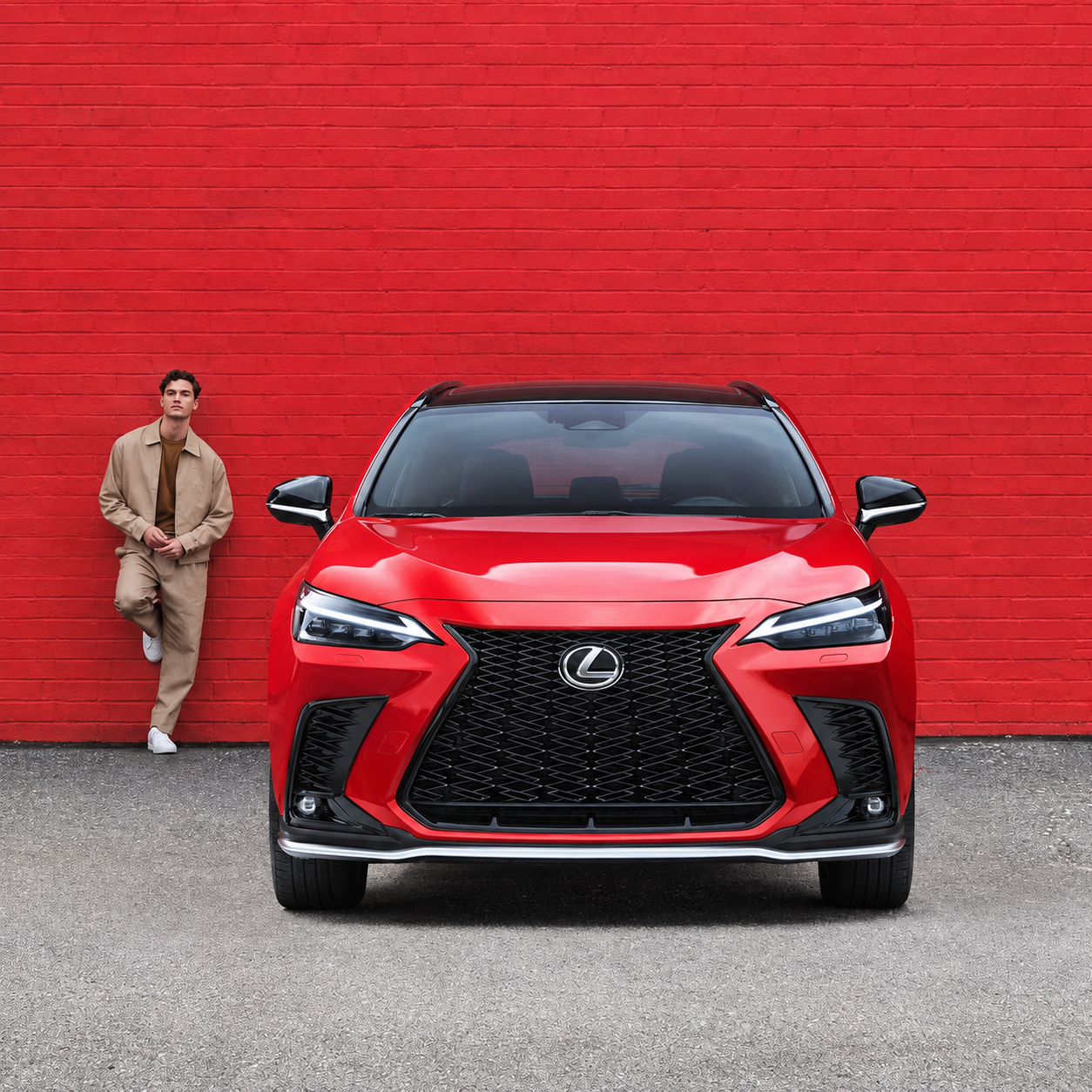
Lexus NX Review – Luxury Without Losing the Plot
We review the Lexus NX 350h, Australia's best-selling luxury SUV, and see whether its hybrid economy, comfort and touring ability justify the price.